Sewer line cleaning in Texas
Texas sewer lines fail on a schedule the rest of the country does not keep. Clay soil moves the pipe, roots never stop growing, and a huge share of the housing stock runs cast iron or clay that is now sixty years old.
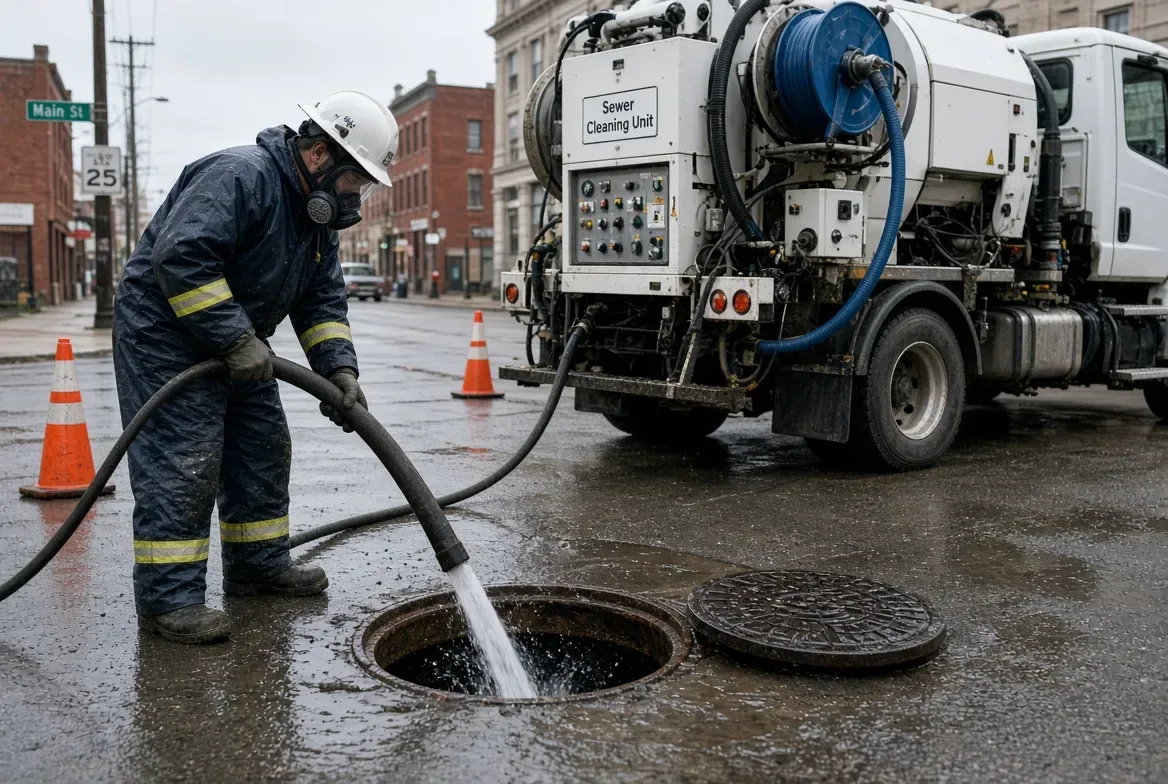
What goes wrong in Texas
A Texas sewer line spends its life being pulled around. The expansive clay under most of the state swells through a wet spring and shrinks hard through a drought summer, and the pipe buried in it moves every time. Joints that were sealed when the house was built work loose, and each one becomes a hairline opening at exactly the depth tree roots are looking for water.
Then the climate keeps the problem running. Most of Texas never gets a hard winter dormancy, so live oak, pecan and hackberry roots keep growing through months when a northern line would be dormant. A Texas sewer line cleared in March can be visibly restricted on camera by October — not because the work was poor, but because the growing season here barely stops.
On top of that sits the pipe itself. Inner-loop Houston, East Dallas, central San Antonio and the older Fort Worth neighbourhoods are full of mid-century cast iron, which scales from the inside until the bore is half what it was. Jetting takes that scale back off the wall. The camera pass afterwards is what tells you honestly whether there is still sound pipe underneath it, and in slab-foundation housing that answer matters a great deal, because the alternative to cleaning is breaking concrete.
How sewer line cleaning works in detail — the method, the equipment and what we look for, written for any state.
What makes this a Texas problem
Drain lines fail for local reasons. These are the conditions that drive sewer line cleaning work across Texas.
Soil that moves under the pipe
Much of Texas sits on expansive clay. It swells in the wet and shrinks hard in drought, and a buried sewer line moves with it. That movement pulls joints apart and opens the hairline gaps roots follow. It is the single most common reason Texas sewer lines develop the offsets and root intrusion we find on camera, and it is why lines here need cleaning more often than the national average.
Cast iron that has run out of life
Inner-loop Houston, East Dallas, central San Antonio and older Fort Worth neighbourhoods are full of cast iron drainage installed mid-century. Cast iron scales from the inside; by sixty or seventy years the bore can be half its original width. Jetting removes the scale, and the camera pass tells you honestly whether the pipe underneath still has wall thickness left.
Roots that never stop growing
Texas does not get a hard winter dormancy across most of the state, so root growth continues for far more of the year than it does further north. Live oak, pecan and hackberry roots are relentless around sewer joints, and a line cleared in spring can be restricting again by autumn.
Signs you need this service
Two or more of these together usually means the line is restricted rather than one fixture being blocked.
- More than one fixture backing up at the same time
- Gurgling from a toilet or tub when a washing machine drains
- Sewage appearing at a floor drain or cleanout — the lowest opening in the system
- Drains that were cabled a few months ago and are slowing again
- Smell of sewer gas near a cleanout or in a basement
- Lawn that is unusually lush or soggy along the line's run
How we do it
-
Locate the cleanout and confirm the blockage
We start at a cleanout rather than pulling a toilet where possible. If there is no accessible cleanout we will tell you before any work starts, because that changes the job.
-
Camera the line first where access allows
Inspecting first tells us what we are dealing with — roots, grease, scale, a belly holding water, or a break. Jetting a collapsed or badly offset pipe will not fix it, and you should know that before you pay for cleaning.
-
Match pressure and nozzle to the pipe
A 6-inch clay main with root intrusion needs a different nozzle and a different approach than a 4-inch PVC line glazed with grease. Old, thin cast iron and Orangeburg need pressure dialled back deliberately.
-
Jet the full run, then flush
We work the nozzle through the entire length to the municipal connection, not just past the blockage, and flush the loosened material out.
-
Re-camera and show you the result
A second pass with the camera is the only honest proof the line is clear. If the inspection shows a structural problem, you get the footage and a straight explanation of the repair options.
Who this is for
Homeowners
A single main line serving the whole house, usually 4 inches, often with root intrusion at clay or cast iron joints.
Property managers
Multi-unit buildings where one restricted main affects every tenant and an overflow becomes a habitability issue.
Commercial buildings
Longer runs, more fixtures, and far less tolerance for closing the building to deal with a backup.
Sewer Line Cleaning across Texas
We cover 1,228 Texas cities and towns across 244 counties, from the four big metros to towns of a few hundred people.
See the full list of Texas cities we cover, or call (833) 349-0333 and tell us where you are.
Sewer Line Cleaning questions
How often do Texas sewer lines need cleaning?
More often than the national average, and the reason is local. Clay soil movement keeps opening joints, and the lack of a hard winter means roots grow for far more of the year. Lines with active root intrusion in Texas are commonly on an annual interval. A clean PVC line with no root pressure may never need it again — the camera inspection is what tells you which you have.
Is jetting safe on a Texas slab foundation home?
Yes, and on slab construction it is usually the better option, because the alternative for a line cast under concrete is breaking the slab to reach it. The part that matters is matching pressure to the pipe. Older cast iron under a Texas slab gets inspected first and jetted conservatively rather than hit with maximum pressure.
How is hydro jetting different from snaking my sewer line?
A cable cuts a channel through the blockage; jetting scours the pipe wall back to its original diameter. Cabling gets flow back fastest in an emergency, which is sometimes exactly what you need. Jetting is what keeps the line clear, because it removes the material a cable leaves behind.
Can hydro jetting damage my pipes?
It can, if pressure and nozzle are wrong for the pipe. Thin, heavily scaled cast iron, old Orangeburg and already-cracked clay need pressure dialled back or a different approach entirely. That is the reason we camera the line before jetting rather than after.
How often does a sewer line need jetting?
It depends entirely on why it clogs. A line with active root intrusion may need annual service; a restaurant main carrying grease may need quarterly. A clean PVC line with no root pressure may never need it again. The camera inspection is what tells you which one you have.
Do you need a cleanout to jet the line?
An accessible cleanout makes the job faster, safer for the pipe and cheaper. Where there is not one, access may mean pulling a toilet or going through a roof vent, and sometimes installing a cleanout is the sensible first step. We will tell you which applies before starting.
Other services
Drain Line Cleaning in Texas
Clears the branch lines running from individual sinks, tubs, showers and floor drains into the main.
Service detailsMain Sewer Line Clog Removal in Texas
Emergency clearing when the main line is fully blocked and waste is backing up into the building.
Service detailsCommercial Drain Cleaning in Texas
Scheduled and emergency drain service for buildings where a backup means closing the doors.
Service detailsGrease Line Cleaning in Texas
Removes hardened fat, oil and grease from kitchen waste lines and interceptor runs.
Service detailsRestaurant Drain Cleaning in Texas
Drain service built around a working kitchen — floor sinks, dish pit, prep lines and interceptor.
Service detailsStorm Drain Cleaning in Texas
Clears catch basins, area drains and storm lines so sites drain before the water reaches the building.
Service detailsNeed sewer line cleaning in Texas?
Describe what the drain is doing and we will tell you whether this is an emergency, a cleaning job, or something that needs a camera down the line first.
(833) 349-033324/7 emergency service