Drain line cleaning
Branch drains are the smaller pipes between a fixture and the main — typically 1.5 to 3 inches. They are where soap, grease, hair and food waste build up first, and where a slow drain usually starts.
What goes wrong
A branch drain rarely blocks with one object. It narrows. Soap scum and fat coat the wall, hair and food particles catch in the film, and the effective diameter shrinks until water stands in the sink. Because the pipe is small, it does not take much buildup to cause a noticeable problem.
Small lines are also where chemical drain cleaners do the most harm. Caustic products generate heat, can soften PVC and corrode older metal traps and arms, and typically bore a narrow channel through the clog rather than removing it. The material stays in the pipe and the drain slows again.
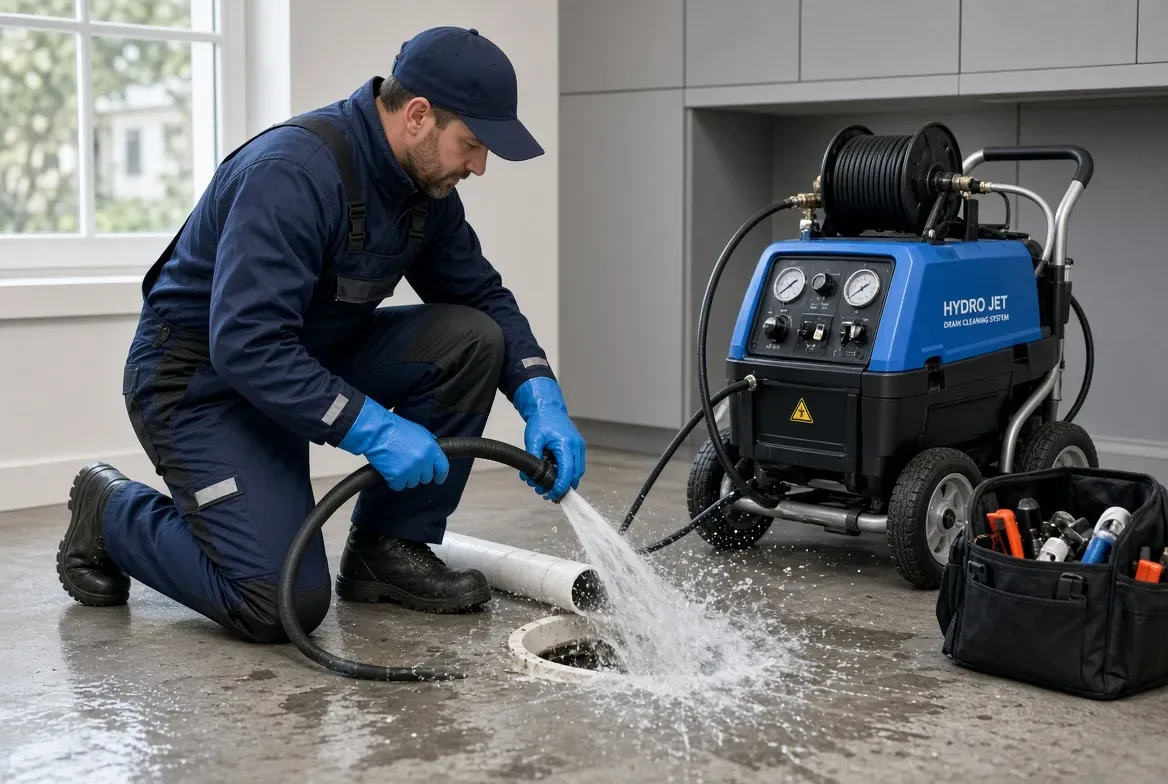
Jetting a branch line uses a smaller hose and nozzle at lower pressure than a sewer main. The goal is the same: strip the wall back to bare pipe so the line drains at the rate it was designed for, instead of leaving a film for the next handful of hair to catch on.
Signs you need this service
Two or more of these together usually means the line is restricted rather than one fixture being blocked.
- One fixture draining slowly while the rest of the building is fine
- Standing water in a sink, shower base or floor drain
- A drain that needs chemical cleaner every few weeks to keep moving
- Smell coming from an individual drain rather than the whole system
- Repeated clogs in the same fixture after cabling
- Washing machine standpipe overflowing during a drain cycle
How we do it
-
Confirm it is the branch and not the main
If several fixtures are affected the problem is downstream and cleaning one branch will not fix it. Identifying this correctly is most of the diagnosis.
-
Access through the nearest clean point
Usually a trap arm, cleanout or the fixture opening, chosen to reach the buildup without dismantling more of the system than necessary.
-
Jet at pressure matched to a small line
Branch drains take a smaller hose and lower pressure than a main. Old galvanised and thin-wall traps get a more conservative approach.
-
Flush and test under real load
We run the fixture at full volume afterwards, because a line that passes a trickle can still fail under an actual sink-full of water.
Who this is for
Kitchens
Fat, oil and food waste coat the horizontal run past the disposal and are the most common cause of a slow kitchen sink.
Bathrooms
Hair bound in soap scum, usually within a few feet of the tub or shower drain.
Laundry and utility
Lint and detergent residue, often in a standpipe that overflows only during the pump-out cycle.
Where we do this work
We take drain line cleaning work nationwide. Texas is our first fully mapped state, down to individual city coverage.
Drain Line Cleaning in Texas
Expansive clay soil, aging cast iron and year-round root growth make Texas lines fail faster than the national average. We cover 1,228 Texas cities across 244 counties.
Not in Texas?
Call us anyway. We work nationwide, and more states are being mapped the same way. If we can cover your address we will tell you on the phone, and if we cannot we will say that rather than waste your time.
Drain Line Cleaning questions
Is jetting overkill for one slow sink?
Sometimes, yes. A simple trap clog is a trap clog. Jetting earns its place when the same drain keeps clogging, when the line is long or has several fittings, or when cabling has already been tried and did not hold.
Will this stop me needing drain cleaner every month?
That is the point of it. Chemical cleaner opens a channel and leaves the rest; jetting takes the wall back to bare pipe, so there is no film for the next handful of hair to catch on.
Can you jet old galvanised or cast iron branch lines?
Often, at reduced pressure. Galvanised pipe corrodes from the inside and can be thin by the time it is slow draining. We inspect first, and if the pipe will not take jetting safely we tell you rather than risking a leak inside a wall.
Other services
Sewer Line Cleaning
Clears the main line that carries waste from your building to the municipal sewer or septic tank.
Service detailsMain Sewer Line Clog Removal
Emergency clearing when the main line is fully blocked and waste is backing up into the building.
Service detailsCommercial Drain Cleaning
Scheduled and emergency drain service for buildings where a backup means closing the doors.
Service detailsGrease Line Cleaning
Removes hardened fat, oil and grease from kitchen waste lines and interceptor runs.
Service detailsRestaurant Drain Cleaning
Drain service built around a working kitchen — floor sinks, dish pit, prep lines and interceptor.
Service detailsStorm Drain Cleaning
Clears catch basins, area drains and storm lines so sites drain before the water reaches the building.
Service detailsNeed drain line cleaning?
Describe what the drain is doing and we will tell you whether this is an emergency, a cleaning job, or something that needs a camera down the line first.
(833) 349-033324/7 emergency service