Restaurant drain cleaning in Texas
Texas restaurants run year-round patio service, sit inside active municipal grease programmes, and get inspected on exactly the conditions a blocked floor drain creates.
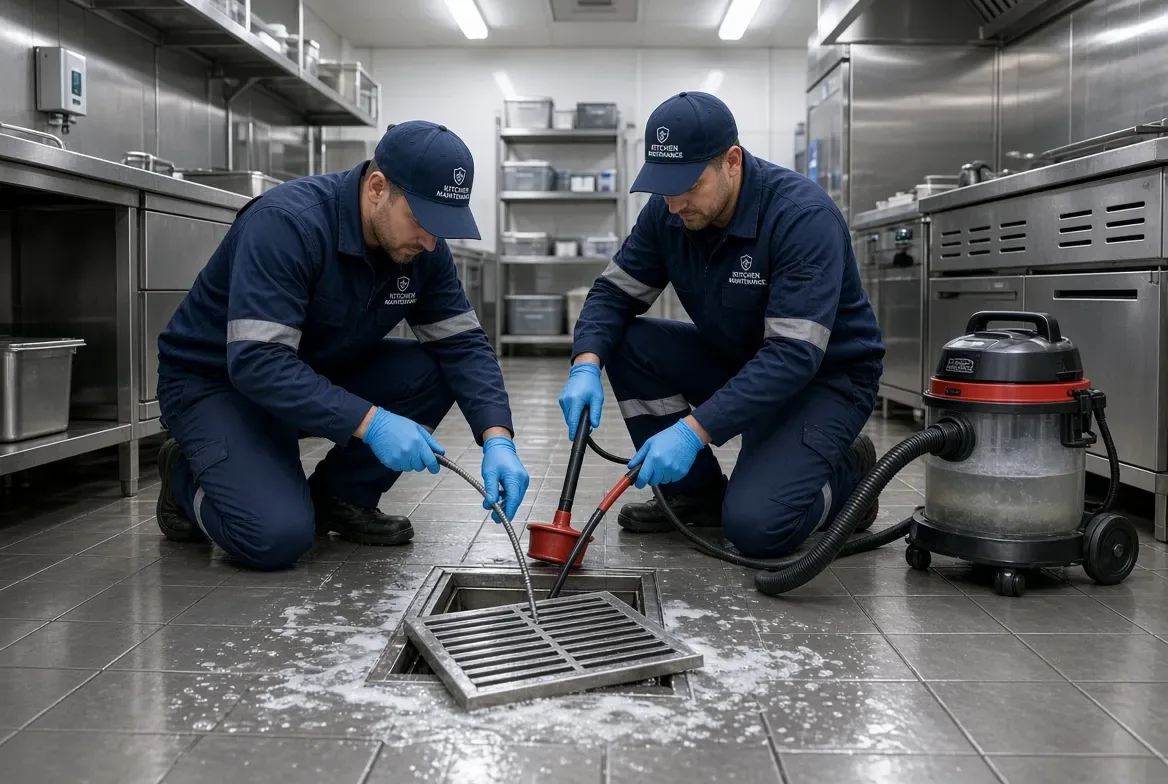
What goes wrong in Texas
Texas food establishments are inspected under the state food establishment rules, administered locally by city and county health departments. Standing water at a dish pit, a backing-up floor drain or any sewage in a food preparation area are precisely the conditions that produce violations, and at the extreme a closure. Documented drain maintenance is part of defending against that, which is why we leave records rather than just an invoice.
The big Texas metros add a second layer. Houston, Dallas, San Antonio and Austin all run grease control programmes with interceptor sizing requirements, cleaning intervals and record-keeping obligations. For an operator that means kitchen drainage is something a city can ask you about, not only something that inconveniences you on a Friday night.
There is also a very Texas source of chronic problems: the patio. Outdoor service runs most of the year here, and patio bars, ice wells and outdoor prep stations are very often drained through lines added years after the building went up and sized optimistically. Those additions cause slow drainage that nobody connects back to the main kitchen, because they were never on the original plans.
How restaurant drain cleaning works in detail — the method, the equipment and what we look for, written for any state.
What makes this a Texas problem
Drain lines fail for local reasons. These are the conditions that drive restaurant drain cleaning work across Texas.
Inspections look at drainage
Texas food establishments are inspected under the state food establishment rules, administered locally by city and county health departments. Standing water, backing-up floor drains and sewage in a food preparation area are exactly the conditions that produce violations and, at the extreme, closure. Documented drain maintenance is part of defending against that.
Grease rules have teeth in the big metros
Houston, Dallas, San Antonio and Austin all operate grease control programmes covering interceptor sizing, cleaning frequency and record-keeping. Keeping kitchen lines and interceptor runs clear is not only about avoiding a backup — it is part of staying on the right side of the municipal programme.
Patio culture and year-round outdoor service
Texas restaurants run outdoor service for most of the year, and patio bars, ice wells and outdoor prep stations usually drain through lines added later and sized optimistically. Those additions are a very common source of chronic slow drainage that nobody connects to the original kitchen.
Signs you need this service
Two or more of these together usually means the line is restricted rather than one fixture being blocked.
- Water standing at a floor sink or in the dish pit during service
- Drains that back up predictably on the busiest nights
- Smell from floor drains when the kitchen warms up
- Flies around drains or the interceptor
- Mop sink or prep sink draining slowly
- An inspector has already mentioned drainage
How we do it
-
Schedule around service
After close or before prep. The kitchen is operational for the next service, with no hose across a working line.
-
Cover the whole kitchen, not one drain
Floor sinks, dish pit, prep sinks, mop sink and the run to the interceptor — cleaning one drain in a kitchen that shares a line achieves very little.
-
Hot-water jet the grease-bearing runs
Heat releases hardened FOG from the pipe wall so it flushes out instead of smearing further along.
-
Check the interceptor inlet and outlet
A clean interceptor with a blocked inlet still backs up into the kitchen.
-
Leave records and a service interval
Documentation for your health inspection file, and an interval matched to how hard the kitchen actually runs.
Who this is for
Independent restaurants
One kitchen, no in-house maintenance, and no capacity to lose a service.
Multi-site groups and franchises
Consistent scheduling and documentation across every location under one contact.
Bars, cafés and ghost kitchens
Smaller footprints, often older shared lines in buildings never designed for food service.
Restaurant Drain Cleaning across Texas
We cover 1,228 Texas cities and towns across 244 counties, from the four big metros to towns of a few hundred people.
See the full list of Texas cities we cover, or call (833) 349-0333 and tell us where you are.
Restaurant Drain Cleaning questions
Will drain records actually help with a Texas health inspection?
They help you demonstrate maintenance rather than argue about it. Texas food establishments are inspected locally by city and county health departments, and standing water or a backing-up floor drain in a prep area is a findable condition. We provide camera footage where taken, what was found and what was done, with dates.
Our patio bar drains slowly but the kitchen is fine. Why?
Very common in Texas, because patio and outdoor prep drainage is usually added after the original build and run on undersized lines that are not on the drawings. It is worth inspecting as its own run rather than assuming it shares the kitchen's problem.
Can you come after we close?
Yes, and that is how most restaurant work is scheduled. Overnight or early morning, so the kitchen is ready for the next service.
How often does a restaurant need drain jetting?
High-volume kitchens are usually quarterly, lighter operations semi-annual. The honest answer comes from inspecting your lines rather than quoting a package.
Will you give us documentation for health inspections?
Yes — camera footage where taken, what was found and what was done, with dates. That is the record an inspector or a franchisor will ask to see.
One of our floor drains backs up every weekend. Is that fixable?
Usually, yes, but it needs diagnosis rather than repeated cabling. A drain that fails predictably under load is telling you the line is restricted or badly fallen, and a camera inspection will show which.
Other services
Sewer Line Cleaning in Texas
Clears the main line that carries waste from your building to the municipal sewer or septic tank.
Service detailsDrain Line Cleaning in Texas
Clears the branch lines running from individual sinks, tubs, showers and floor drains into the main.
Service detailsMain Sewer Line Clog Removal in Texas
Emergency clearing when the main line is fully blocked and waste is backing up into the building.
Service detailsCommercial Drain Cleaning in Texas
Scheduled and emergency drain service for buildings where a backup means closing the doors.
Service detailsGrease Line Cleaning in Texas
Removes hardened fat, oil and grease from kitchen waste lines and interceptor runs.
Service detailsStorm Drain Cleaning in Texas
Clears catch basins, area drains and storm lines so sites drain before the water reaches the building.
Service detailsNeed restaurant drain cleaning in Texas?
Describe what the drain is doing and we will tell you whether this is an emergency, a cleaning job, or something that needs a camera down the line first.
(833) 349-033324/7 emergency service