High-pressure sewer and drain cleaning, nationwide
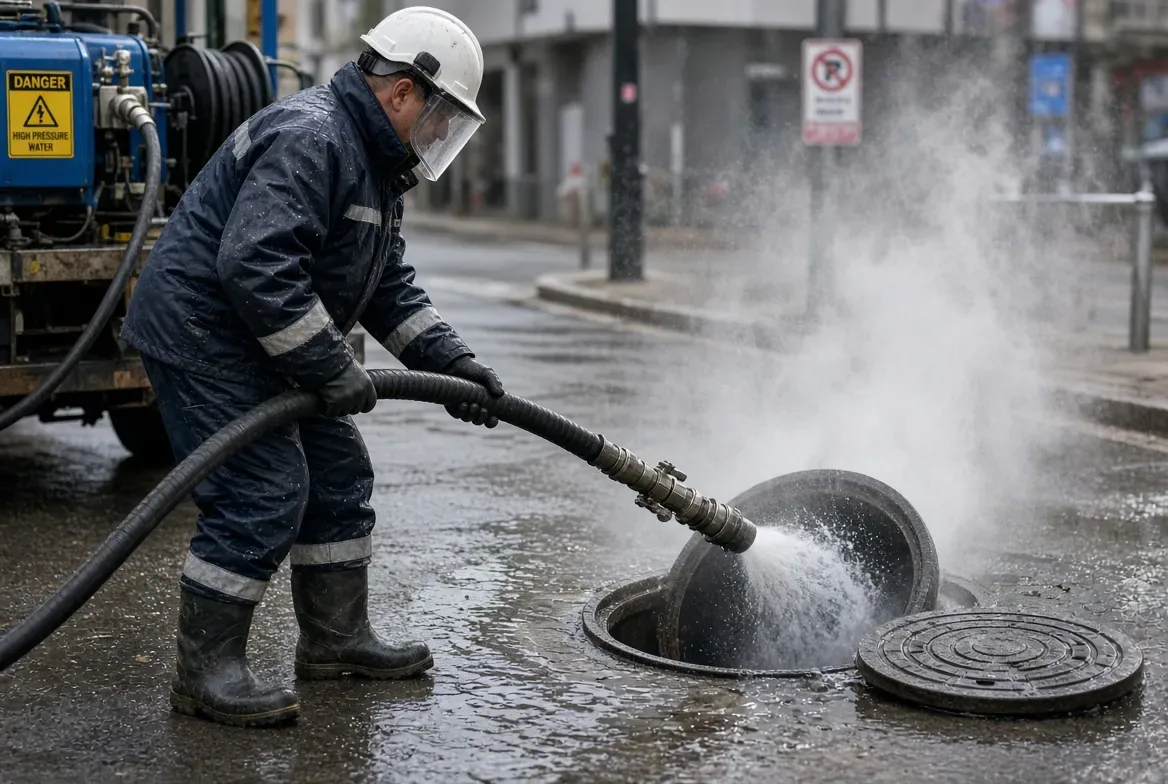
Hydro jetting scours your line back to the full diameter of the pipe instead of punching a hole through the blockage. We camera the line, show you what caused it, and tell you plainly whether cleaning is the fix.
Why the method matters more than the callout
Most drain companies sell you a cleared line. The question worth asking is what is still inside the pipe afterwards.
What a cable actually does
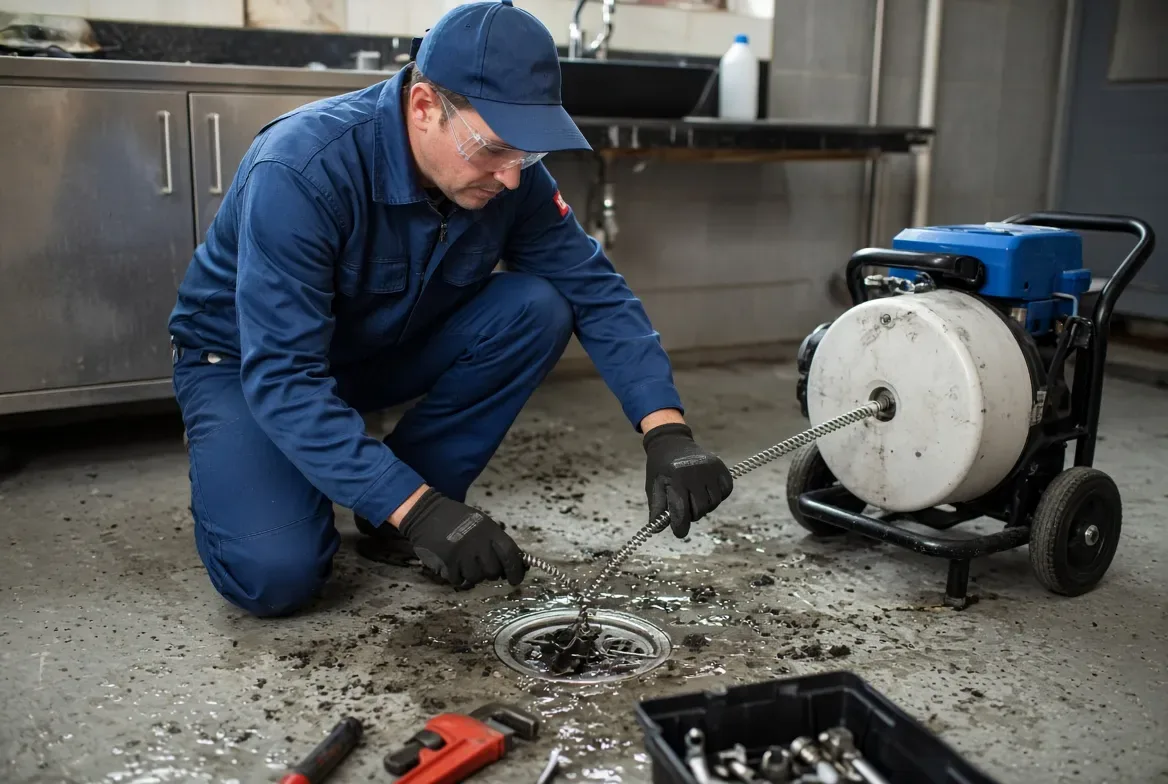
A drain cable spins a cutting head through the obstruction and opens a channel. Flow comes back quickly, which is exactly what you want at two in the morning with sewage on the floor. But the roots, grease and scale lining the pipe wall are still there, and they catch the next thing that comes down the line. That is why a cabled drain often slows again within months.
What jetting does differently
Water leaves the nozzle through rear-facing jets, which drive the head up the line and scour the wall as it travels. Debris flushes back toward the access point instead of being pushed further downstream. The pipe comes out at the diameter it was installed at — so there is nothing left for the next blockage to form on.
The same pipe. Cabling clears a channel through the middle; jetting takes the wall back to bare pipe.
Why the pipe wall is the whole point
Flow coming back is not the same as a clean line. A channel through the middle of a root mass or a grease deposit still leaves the pipe running at a fraction of its diameter, and the next thing down the line catches on what is left. Scouring the wall is what buys you the years, not the minutes.
We will tell you when jetting is the wrong answer. Jetting cannot fix a collapsed pipe, a badly offset joint or a section that has fallen and holds water. Those need repair, and cleaning them is a temporary result you paid for twice. It is the reason we inspect the line before quoting the work rather than after.
What we clean
Seven services covering residential mains, branch drains, commercial buildings, commercial kitchens and site storm drainage.
Sewer Line Cleaning
Clears the main line that carries waste from your building to the municipal sewer or septic tank.
Service detailsDrain Line Cleaning
Clears the branch lines running from individual sinks, tubs, showers and floor drains into the main.
Service detailsMain Sewer Line Clog Removal
Emergency clearing when the main line is fully blocked and waste is backing up into the building.
Service detailsCommercial Drain Cleaning
Scheduled and emergency drain service for buildings where a backup means closing the doors.
Service detailsGrease Line Cleaning
Removes hardened fat, oil and grease from kitchen waste lines and interceptor runs.
Service detailsRestaurant Drain Cleaning
Drain service built around a working kitchen — floor sinks, dish pit, prep lines and interceptor.
Service detailsStorm Drain Cleaning
Clears catch basins, area drains and storm lines so sites drain before the water reaches the building.
Service detailsSigns your line needs more than a plunger
Any one of these on its own can be minor. Two or more together usually means the line itself is restricted rather than a single fixture being blocked.
- More than one fixture backing up at the same time
- Gurgling from a toilet or tub when the washing machine drains
- Sewage appearing at the lowest drain in the building
- A drain that was cleared recently and is already slowing
- Sewer smell near a cleanout, basement or floor drain
- Standing water at a floor sink or dish pit
- Ponding in a car park or yard long after the rain stops
- Toilets that need a second flush to clear
If waste is backing up right now, stop running water anywhere in the building — every litre you add has to come out somewhere — and call us on (833) 349-0333.
How a job runs
The same sequence whether it is a blocked house main at midnight or a scheduled kitchen service before prep.
-
You call and we diagnose over the phone
What is backing up, how many fixtures, whether there is an accessible cleanout. It tells us what to bring and tells you what to do in the meantime.
-
We inspect the line before cleaning it
A camera pass establishes whether you have roots, grease, scale, a belly holding water or a structural failure. Each of those means something different, and jetting only solves some of them.
-
Pressure and nozzle matched to your pipe
A clay main with root intrusion takes a different head than a PVC line glazed with grease. Thin, heavily scaled cast iron and old Orangeburg get pressure dialled back deliberately.
-
Jet the full run, not just past the blockage
We work the nozzle through the whole length and flush the loosened material out of the system rather than leaving it to settle downstream.
-
Re-camera, then tell you what we found
The second pass is the only honest proof the line is clear. If the footage shows a problem cleaning will not fix, you get that straight, along with the footage.
Who we work for
Homeowners
One main line serving the whole house, usually four inches, and usually root intrusion at clay or cast iron joints. Mostly urgent, occasionally preventative before selling a property.
Commercial and managed property
Longer, flatter runs and far higher fixture counts, where a backup closes the building. We schedule outside operating hours and leave documentation for your maintenance records.
Restaurants and food service
The heaviest drain load of any building type. Hot-water jetting on the grease runs, scheduled after close, with records for health inspections.
Where we work
We take work nationwide. Texas is our first fully mapped state — every incorporated city, with local coverage detail for each one.
Hydro jetting in Texas
Clay soil that moves under the pipe, mid-century cast iron at the end of its life, year-round root growth and one of the largest restaurant sectors in the country. Texas lines need cleaning more often than the national average, and we have the whole state mapped.
Texas services
More states are being mapped the same way — city by city, with the local conditions that actually drive drain failure in each one. Call (833) 349-0333 wherever you are; if we can cover you we will say so, and if we cannot we will say that too.
Common questions
What is hydro jetting?
Hydro jetting cleans a drain or sewer line with water at high pressure, typically 3,000 to 4,000 PSI. The water leaves a specialised nozzle through rear-facing jets, which both drive the head up the pipe and scour the wall as it travels. It removes grease, scale, roots and sediment from the full circumference of the pipe rather than boring a channel through the middle of a blockage.
Is hydro jetting better than snaking?
They do different jobs. A cable is faster for a single hard obstruction and is often the right call in an emergency. Jetting is what actually cleans the pipe, because it removes the material a cable leaves on the wall. If a drain keeps clogging after being cabled, that is usually the reason.
Will hydro jetting damage my pipes?
It can if the pressure and nozzle are wrong for the pipe. Thin, heavily scaled cast iron, old Orangeburg and already-cracked clay need pressure dialled back or a different approach entirely. This is exactly why we camera the line before jetting rather than afterwards — so we know what we are putting water into.
How much does hydro jetting cost?
It depends on the length and diameter of the line, how accessible the cleanout is, what is in the pipe and whether the work is scheduled or an after-hours emergency. We will not quote a figure sight unseen, because a number given over the phone without knowing whether you have an accessible cleanout is a guess. Call and describe the situation and we will tell you what the job involves.
Do you work after hours?
Yes. We run a 24-hour line because a blocked main cannot wait until Monday. Most commercial and restaurant work is deliberately scheduled overnight or early morning so the business does not have to close.
Can hydro jetting fix a broken pipe?
No, and anyone who tells you otherwise is selling you something. Jetting cleans pipe; it cannot repair a collapsed section, a badly offset joint or a line that has fallen and holds water. If the camera shows one of those, we will tell you, even though cleaning is what we sell.
How often should a line be jetted?
Entirely dependent on why it clogs. A line with active root intrusion may need annual service. A busy restaurant grease line is often quarterly. A clean PVC line with no root pressure may never need it again. The inspection is what tells you which you have.
Tell us what your drain is doing
Describe the symptoms on the phone and we will tell you whether this is an emergency, a cleaning job or something that needs a camera down the line first.
(833) 349-033324/7 emergency servicePrefer to write it down? Send the details through our contact form.